


EPDM rubber has become a widely used material for outdoor playgrounds, sports facilities, walking paths, and recreational surfaces. Its popularity is closely related to its weather resistance, elasticity, and flexibility in surface design. However, like any construction material, EPDM has both advantages and limitations that should be considered before selecting it for a project.
Why Is EPDM Suitable for Outdoor Environments?
EPDM (Ethylene Propylene Diene Monomer) is a synthetic rubber known for its resistance to ultraviolet radiation, ozone, moisture, and temperature variations. These properties help it maintain flexibility and structural performance under changing outdoor conditions.
Unlike conventional materials that may become brittle after prolonged environmental exposure, properly manufactured EPDM granules can retain their elasticity and color characteristics over extended periods.
The Real Advantages of EPDM Rubber
- Weather Resistance: Performs well under sunlight, rainfall, and changing outdoor temperatures.
- Elasticity: Provides a flexible surface that improves walking comfort and helps absorb impact.
- Color Stability: Pigments are incorporated into the rubber material, allowing a wide range of decorative colors.
- Slip Resistance: Its textured surface can provide good traction when properly designed and maintained.
- Design Flexibility: Different colors and particle sizes allow customized patterns, pathways, and recreational surfaces.
What Are the Disadvantages?
Despite its advantages, EPDM is not suitable for every project.
1. Higher Initial Investment
Compared with some conventional paving materials, EPDM rubber surfacing generally requires a higher initial investment, particularly for professionally installed systems.
2. Installation Requirements
The quality of the finished surface depends heavily on substrate preparation, binder compatibility, mixing ratios, and installation conditions. Poor workmanship can result in loose granules, cracking, or premature deterioration.
3. Surface Temperature
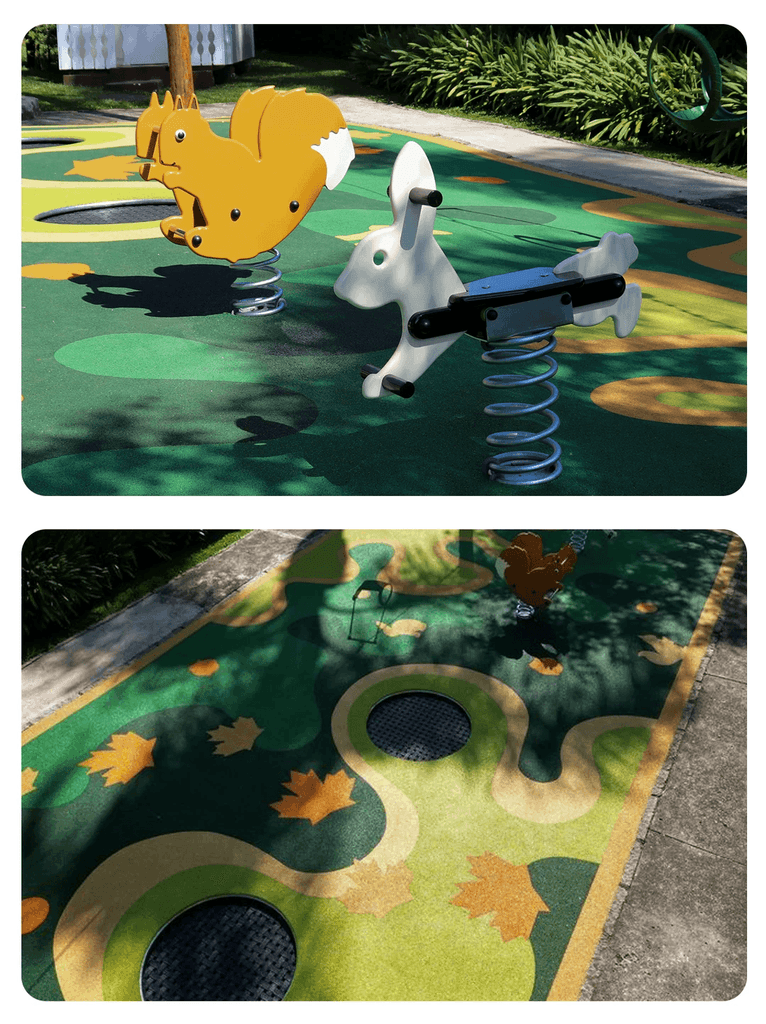
Dark-colored EPDM surfaces can absorb considerable solar heat. In areas exposed to intense sunlight, color selection and surface temperature should be evaluated carefully.
4. Maintenance Is Still Necessary
Although EPDM requires relatively little maintenance, regular cleaning and inspection remain important. Dirt accumulation, blocked drainage, and localized damage can affect long-term performance.
Is EPDM Worth Choosing?
For outdoor projects requiring flexibility, weather resistance, decorative appearance, and impact absorption, EPDM is a practical material option. However, the final performance depends on more than the rubber granules themselves.
A complete system may include an SBR cushioning base, an EPDM wearing layer, and a compatible polyurethane binder. For playground applications, the total system thickness and tested impact-attenuation performance must also meet the relevant safety requirements. U.S. Consumer Product Safety Commission+2
Conclusion
EPDM rubber is widely used outdoors because it combines elasticity, weather resistance, and design flexibility. Nevertheless, installation quality, project budget, surface temperature, and maintenance requirements should all be considered before making a decision. Understanding both its advantages and limitations helps contractors and project owners select a more suitable surfacing system.
