


EPDM vs SBR Granules is an important comparison when selecting rubber materials for playgrounds, running tracks and recreational flooring. Although both materials are widely used in rubber surfacing systems, they differ in raw materials, appearance, weather resistance and typical applications.
Understanding these differences helps contractors, distributors and project buyers select the right material for their requirements.
What Are EPDM Rubber Granules?
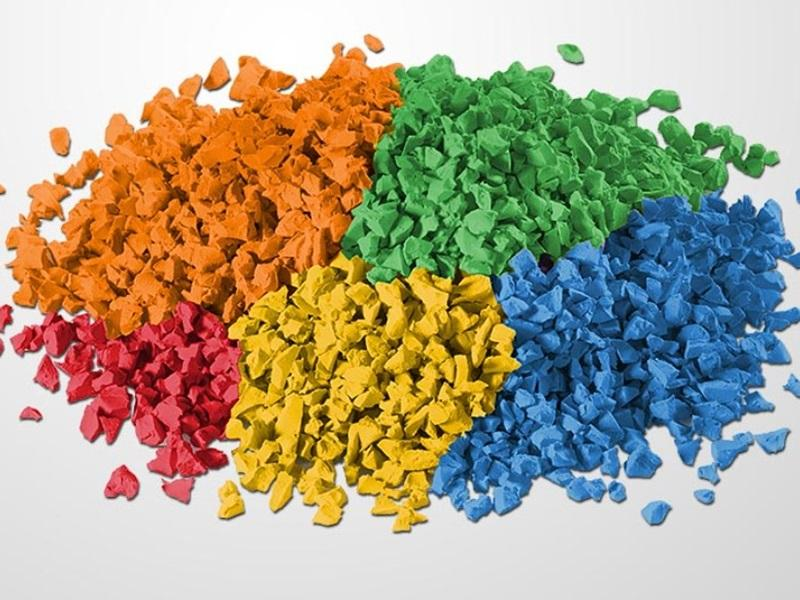
EPDM stands for Ethylene Propylene Diene Monomer. It is a synthetic rubber material commonly manufactured into coloured granules for outdoor and indoor surfacing applications.
EPDM granules are available in various colours, particle sizes and specifications. They are commonly used in playground flooring, sports tracks, walking paths and recreational areas.
Key characteristics include:
- Good resistance to outdoor weather conditions.
- Good UV and colour stability, depending on the formulation.
- A wide selection of colours.
- Suitable for decorative and functional rubber surfacing.
- Compatibility with appropriate polyurethane binders.
What Are SBR Rubber Granules?
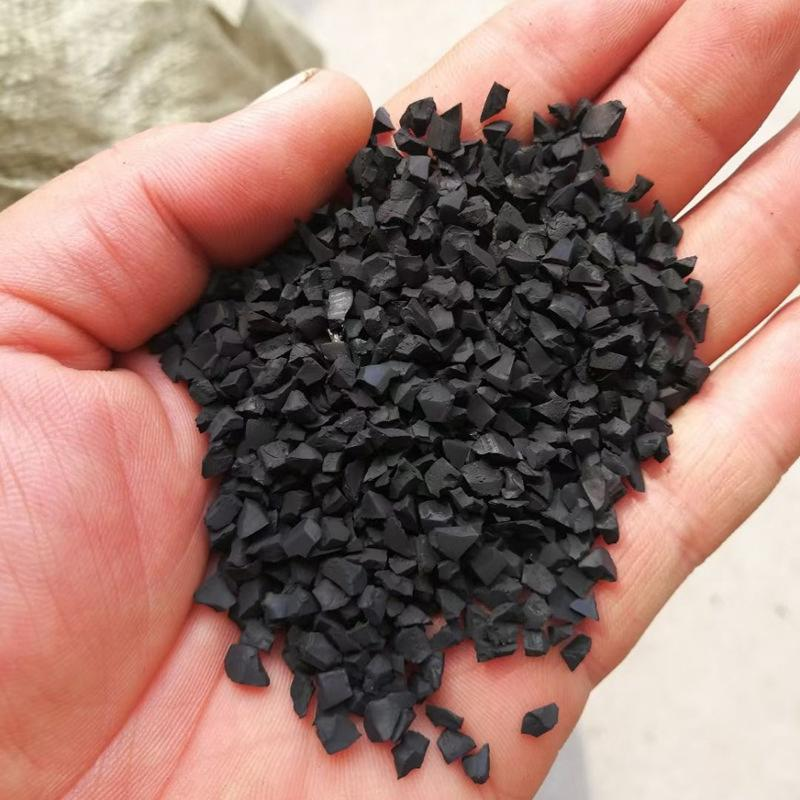
SBR stands for Styrene Butadiene Rubber. SBR granules used in surfacing are often manufactured from recycled rubber materials, including used vehicle tyres.
They are commonly used in rubber flooring systems where cushioning, material economy and base-layer applications are important.
Typical characteristics include:
- Generally lower material costs than virgin EPDM.
- Common availability in black.
- Suitable for cushioning and elastic base layers.
- Availability in different particle sizes.
- Compatibility with suitable polyurethane binder systems.
Some SBR products are also available in coloured or coated forms, depending on the manufacturing process.
EPDM vs SBR Granules: Main Differences
The two materials serve different purposes in rubber surfacing projects.
| Comparison | EPDM Granules | SBR Granules |
|---|---|---|
| Material | Synthetic rubber | Styrene-butadiene rubber |
| Typical appearance | Multiple colours | Usually black |
| UV resistance | Generally good | Depends on formulation |
| Colour stability | Suitable for coloured surfaces | Depends on coating and formulation |
| Common applications | Wearing and decorative surfaces | Cushioning and base layers |
| Material cost | Generally higher | Generally lower |
| Outdoor use | Widely used | Depends on the complete system |
Actual performance depends on material quality, binder selection and the complete surfacing system.
Which Material Is Better for Outdoor Playgrounds?
For playgrounds requiring colourful decorative finishes, EPDM granules are commonly selected as the exposed wearing layer.
Their wide colour range allows designers to create patterns, play zones, decorative borders and customized surface designs.
SBR granules are frequently used in underlying cushioning layers, where they provide an economical way to build up the required system thickness.
Some playground systems combine both materials, using an SBR base layer and an EPDM top layer. The complete system must be designed and tested to meet the required impact attenuation and safety standards.
Can EPDM and SBR Granules Be Mixed?
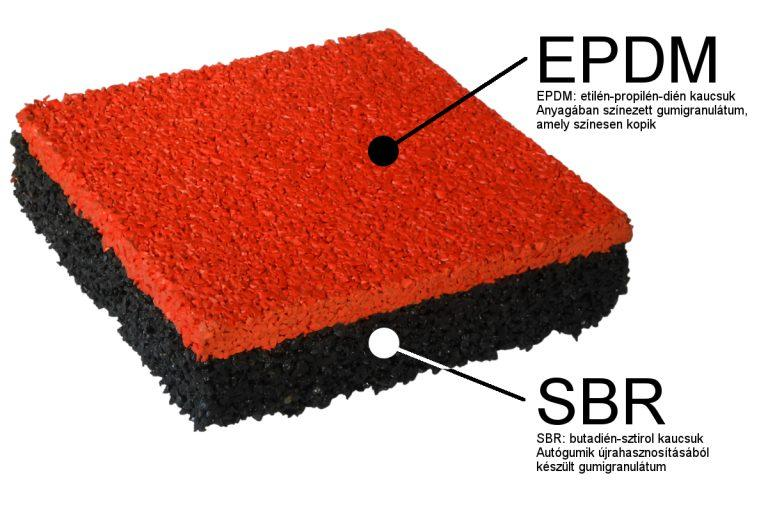
EPDM and SBR granules can be combined in certain rubber flooring systems, provided the binder and material specifications are compatible.
However, mixing the two materials without considering their different properties may affect the finished appearance and performance.
Before production or installation, check:
- Compatibility with the selected polyurethane binder.
- Recommended mixing proportions.
- Particle size and distribution.
- Required surface appearance.
- Applicable safety and performance requirements.
A small trial batch is a practical way to evaluate the finished material before starting a large project.
How to Choose the Right Rubber Granules
The selection process should begin with the intended application rather than material price alone.
For colourful playground surfaces and decorative sports flooring, EPDM is often a suitable choice.
For economical cushioning layers and black rubber base systems, SBR may offer a practical solution.
Buyers should also consider outdoor exposure, expected service conditions, installation methods and maintenance requirements.
Requesting samples and technical specifications from suppliers helps establish whether the material is suitable for the intended project.
Final Thoughts
EPDM and SBR granules both play important roles in modern rubber surfacing. EPDM is widely preferred for colourful exposed surfaces, while SBR is commonly used for economical cushioning and base-layer applications.
Understanding the differences between these materials helps buyers make informed purchasing decisions and select a suitable rubber flooring system for each project.
SEO Focus Keyphrase: EPDM vs SBR Granules
